Charitable Giving and the Tax Year End
A Strategic Conversation About Philanthropy
For charities like Conservation Collective, did you know that how you give is just as important as how much you give? With the April 5th tax year-end fast approaching, many families are unknowingly leaving funds on the table that could be going to nature instead. Every year, an estimated £560 million in Gift Aid goes unclaimed—meaning vital funds remain with HMRC rather than supporting the ecosystems we know and love. Thoughtful planning can reduce taxes, increase your capacity for giving, and ensure your resources are maximised for the causes that need them most. From navigating Inheritance Tax and legacy giving to saving on Capital Gains Tax by gifting shares directly, read on to discover how your philanthropy can go further.
A huge thank you to our supporters John Ditchfield and Harmonic Financial Planning for sharing these vital insights.
With the UK tax burden now around 34-35% of GDP, the highest sustained level in recent decades, tax efficiency is becoming an increasing priority for many investors and families.And as the tax year end approaches on the 5th April, discussions often gravitate towards ISAs, pensions, and capital gains allowances. This is also an ideal time to review how you structure your charitable giving.Thoughtful planning can reduce taxes, increase funds available for charitable giving and legacies, and ensure your contributions support your chosen causes. It can also reduce inheritance tax, as Charitable gifts are exempt, and where gifts are substantial, the inheritance tax rate reduces as a percentage of the estate.In collaboration with Conservation Collective, Harmonic Financial Planning explains how to align your charitable goals with tax efficiency.
Make Sure You Claim Gift Aid Relief (Especially as a Higher-Rate Taxpayer)
Gift Aid provides significant tax relief for donors yet remains underutilised. If you are a higher- or additional-rate taxpayer, ensure you claim the full relief on your tax return.
Charities received £1.7 billion through Gift Aid in 2024/25, yet an estimated £560 million remains unclaimed each year.
When you make a Gift Aid declaration:
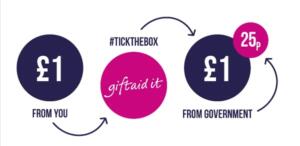
- The charity reclaims basic rate tax from HMRC increasing the value of the gift by 25%.
- Higher and additional rate taxpayers can reclaim the difference between their marginal rate and the basic rate through their tax return.
- Donations can be carried back to the previous tax year (if done before filing).
Example
A £100,000 donation to Conservation Collective
- Becomes £125,000 to the charity.
- A 45% taxpayer can reclaim £25,000 for nature.
- Net cost to donor: £75,000.
Benefit to charity: £125,000
That is a 66% uplift in charitable impact relative to the donor’s net cost.
This relief must be actively claimed. Many donors give generously but do not reclaim higher-rate relief each year. Careful record-keeping and coordinated tax planning help ensure that all available relief is utilised.
Payroll & Pension Giving
If you receive flexible pension income or bonuses, donating from gross income can:
- Automatically secure full marginal rate relief.
- Avoid the administrative reclaim process.
- In some cases, reduce exposure to the 60% effective marginal rate trap above £100,000 income.
Timing income and donations near the tax year-end can significantly influence both the cost and impact of your gift.
Save Capital Gains Tax by Gifting Investments Directly
Many investors mistakenly donate cash instead of assets to charity.
If you hold appreciated investments, such as shares or funds, it is often more tax-efficient to donate the asset directly rather than sell and donate the proceeds.
Gifts of Quoted Shares or Securities
When you donate investments:
- No Capital Gains Tax (CGT) is payable.
- You receive income tax relief at the market value of the gift.
- The charity receives the full value without tax leakage.
Illustration
Shares worth £500,000 with a base cost of £100,000:
- Potential CGT avoided: £96,000 (assuming 24% rate).
- Income tax relief at 45%: £225,000.
- Charity receives full £500,000.
For many donors, selling investments to raise cash can be a barrier, especially if it triggers a large tax bill. Donating investments directly removes this obstacle and maximises tax relief.
Property and Land
Similar reliefs apply to outright gifts of property or land, subject to mortgage and ownership considerations. With careful planning, significant philanthropic capital can be unlocked from these assets.
Pre-Exit & Business Planning
For entrepreneurs, structuring charitable gifts before a business sale can combine gift relief with disposal planning. This should be considered well in advance of any transaction.
Donor-Advised Funds (DAFs): Flexibility With Immediate Relief
Donor-Advised Funds offered by providers such as:
- Charities Aid Foundation
- Stewardship
- NPT UK
- Myriad[PKB1] US
- Transnational Giving Europeallow donors to:
- Receive immediate tax relief.
- Recommend grants over time.
- Involve family members in future giving.
- Maintain anonymity if desired.
Large one-off contributions require careful tax modelling. If a donation exceeds available income in a single tax year, relief may not be fully utilised. Spreading contributions across tax years can increase both relief and long-term charitable funding.
DAFs can also simplify legacy planning by avoiding the complexity of establishing a private charitable trust while preserving family involvement.
Inheritance Tax (IHT) and the Power of Record Keeping
Charitable giving plays a powerful role in estate planning.
Lifetime Gifts
Gifts to charity are immediately excluded from the estate for IHT purposes. Maintaining accurate records of lifetime giving is essential to determine if charitable gifts meet the 10% threshold required for IHT rate reduction on death.
Legacy Gifts
Bequests to charity are 100% exempt from IHT.
If at least 10% of the net estate is left to charity:
- The IHT rate on the remainder falls from 40% to 36%.ExampleOn a £3 million estate with £2 million taxable:
- A £200,000 charitable legacy may reduce the IHT rate.
- Potential saving: £72,000.
- The net cost to the family may be significantly lower than the headline gift amount.
This approach makes philanthropy an effective tool for intergenerational planning.

Maximising Resources for Charity, Not Just Minimising Tax.
The real objective is not to reduce tax for its own sake, but to minimise unnecessary taxes so more of your wealth reaches the causes you care about.
Poor structuring can mean:
- Lost higher-rate relief.
- Avoidable CGT charges.
- Missed IHT efficiencies.
- Inconsistent family engagement.Good structuring means:
- More funds to charity.
- Lower friction in giving decisions.
- Clear documentation and compliance.
- Stronger legacy alignment.
Why the Tax Year End Matters
The weeks before 5 April create a unique planning window:
- Use or lose annual CGT allowances.
- Optimise income timing and Gift Aid carry-back.
- Structure DAF contributions efficiently.
- Coordinate charitable giving alongside ISA and pension planning.
- Ensure documentation is complete for HMRC.
Integrating charitable giving into year-end financial planning, rather than treating it as an afterthought, provides greater clarity and control.
A Collaborative Approach
Conservation Collective works with donors committed to protecting the natural world. Harmonic Financial Planning works with families who want their wealth to reflect their values.
Together, this creates an opportunity for donors to:
- Clarify charitable objectives.
- Explore tax-efficient structures.
- Align family legacy planning.
- Maximise long-term philanthropic impact.
A Conversation Worth Having
If you are considering a significant gift—whether cash, investments, property, or a legacy commitment—its structure is important.
Before the tax year closes, it may be worth asking:
- Are you reclaiming all available relief?
- Are you holding appreciated assets that could be donated more efficiently?
- Is your estate structured to reflect your philanthropic intentions?
- Are your records sufficient to optimise IHT outcomes?
At Conservation Collective, we believe that supporting local action is the most powerful force for nature. By structuring your year-end giving strategically, you aren’t just ‘donating’—you are maximising the critical funds needed to empower local communities leading the way.
A strategic discussion with Harmonic Financial Planning can help ensure your generosity achieves its greatest impact for both your family and the causes you support.
This article is for general information only and does not constitute tax or legal advice. Professional advice should be sought before taking action.
Please contact John Ditchfield and Harmonic Financial Planning for more information on how to align your charitable goals with tax efficiency john.ditchfield@harmonicfp.com